- Unbeatable prices all year round
- Flat-rate shipping on many products.
- +46 (0)31-27 42 30
- info@streckkodscenter.se

ESL Systems for Supermarkets
ESL systems for supermarkets help grocery stores automate price updates, improve pricing accuracy, reduce manual label work and create a more efficient shopping environment.
With Electronic Shelf Labels, supermarkets can manage thousands of prices centrally and keep shelf prices synchronized with POS, ERP and campaign systems.
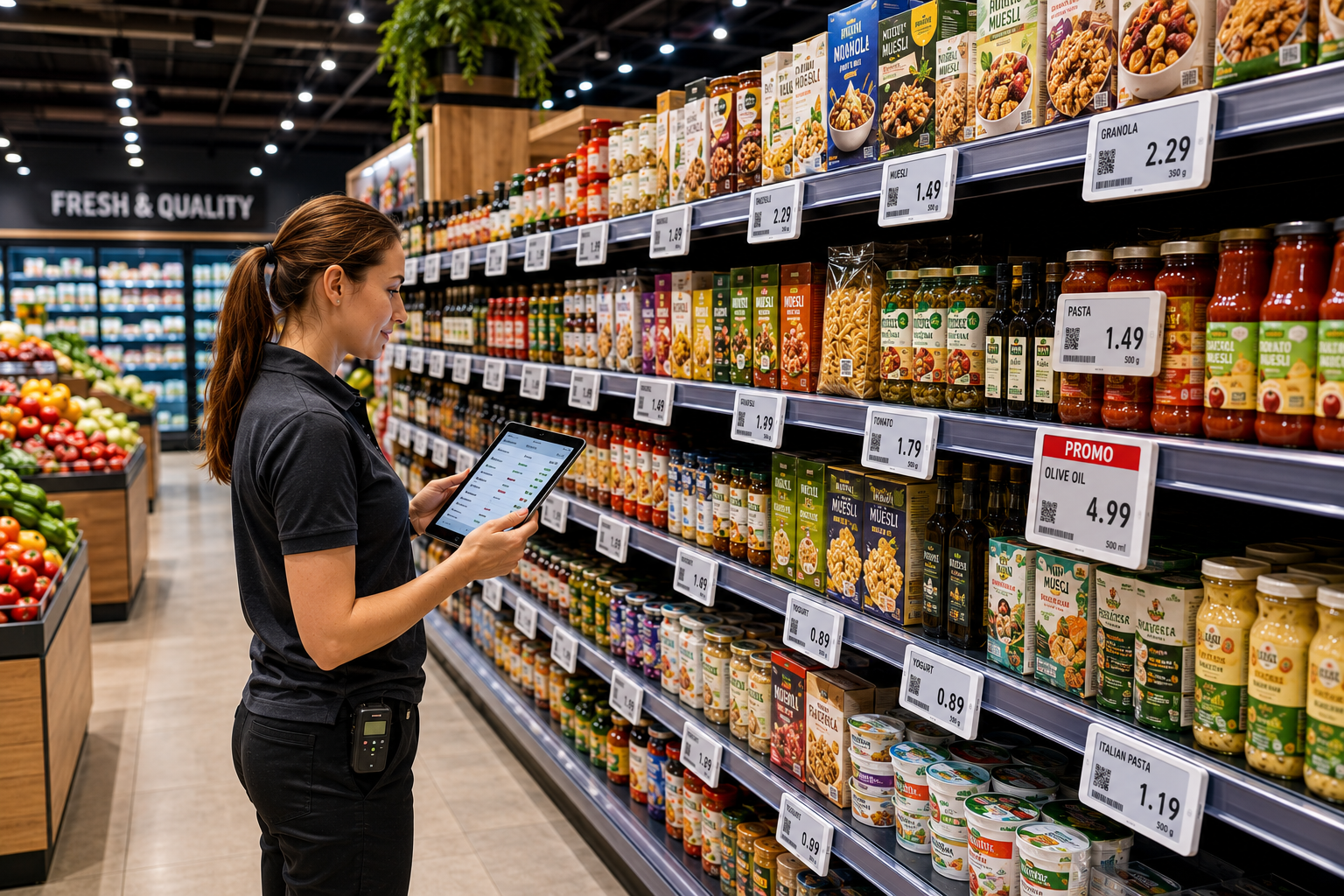
Quick answer: Supermarkets use ESL systems to update prices automatically, reduce manual work, improve pricing accuracy and support fast campaigns across grocery, fresh food, frozen food and household product departments.
Why supermarkets choose ESL systems
Supermarkets handle large product ranges, frequent price changes, weekly campaigns and seasonal promotions. Updating paper shelf labels manually across thousands of products can take a lot of time and create pricing errors.
Electronic Shelf Labels allow supermarkets to update prices centrally and send changes directly to the shelf edge. This improves efficiency and helps stores maintain consistent prices between shelves and checkout systems.
How ESL systems work in supermarkets
An ESL system normally includes digital shelf labels, wireless communication, base stations and central software. Product and price data is managed in the software and then sent wirelessly to the correct label in the store.
When integrated with POS, ERP or pricing systems, the same central data can be used for both checkout and shelf prices. This reduces manual duplication and helps improve price accuracy.
Benefits of ESL in supermarkets
- Automatic price updates: change prices centrally across departments.
- Improved pricing accuracy: reduce shelf and checkout price mismatches.
- Lower labour costs: less time spent printing and replacing paper labels.
- Faster campaigns: start and stop promotions more efficiently.
- Better customer experience: clear and consistent pricing builds trust.
- Less paper waste: reduce repeated printing of shelf labels.
- Scalability: manage thousands of labels across one or several stores.
Supermarket departments that benefit from ESL
| Department | ESL benefit |
| Grocery | Efficient updates across large product ranges |
| Fresh produce | Fast price changes for seasonal and daily items |
| Dairy | Accurate pricing for fast-moving products |
| Frozen food | Clear prices in demanding store environments |
| Beverages | Promotion control for campaigns and multipacks |
| Household products | Consistent pricing across many shelf locations |
ESL and supermarket price accuracy
Price accuracy is critical in supermarkets because customers expect the shelf price and checkout price to match. Manual paper labels increase the risk of delayed updates, missing labels or incorrect placement.
With ESL, price changes can be sent automatically from a central system, helping the store maintain more accurate shelf pricing and reduce price-related customer complaints.
ESL vs manual price labels
Paper labels are simple and low cost at the start, but supermarkets often need to change prices frequently. This creates ongoing manual work for staff and increases the chance of pricing errors.
ESL systems require a higher initial investment but can reduce repetitive labour, improve pricing consistency and make campaign management faster.
Choosing an ESL system for supermarkets
When choosing an ESL solution, supermarkets should consider label sizes, battery life, wireless coverage, software functionality, integration options and scalability. Different departments may need different label formats and mounting options.
- Label size and display readability
- Battery life and maintenance requirements
- Wireless communication coverage
- Integration with POS, ERP and pricing systems
- Support for promotions, QR codes and product data
- Scalability across departments and multiple stores
- Installation, mounting and support requirements
ESL and supermarket automation
ESL systems are part of a broader move toward supermarket automation. By connecting shelf labels with central systems, retailers can manage price changes, promotions and product information more efficiently.
A complete supermarket technology setup may also include barcode scanners, mobile computers, label printers, POS systems and inventory management software.
FAQ – ESL systems for supermarkets
Why do supermarkets use ESL systems?
Supermarkets use ESL systems to automate price updates, improve pricing accuracy, reduce manual label work and manage campaigns more efficiently.
Can ESL update thousands of prices?
Yes. ESL systems are designed to manage large numbers of digital shelf labels and can update thousands of prices from a central platform.
Does ESL reduce labour costs in supermarkets?
Yes. ESL reduces the need to print, sort and replace paper labels manually, which saves staff time and improves store efficiency.
Can ESL integrate with POS and ERP systems?
Yes. Modern ESL systems can integrate with POS, ERP, inventory and pricing systems to keep shelf prices synchronized with central business data.
Need help with ESL systems for supermarkets?
Contact Streckkods-Center for advice on Electronic Shelf Labels, digital price labels, barcode scanners, POS technology and supermarket automation.
Email: info@streckkodscenter.se
Phone: +46 (0)31-27 42 30