- Unbeatable prices all year round
- Flat-rate shipping on many products.
- +46 (0)31-27 42 30
- info@streckkodscenter.se

Benefits of ESL in Retail
Electronic Shelf Labels (ESL) help retailers update prices faster, improve pricing accuracy, reduce manual work and create a more efficient store environment.
From supermarkets and pharmacies to electronics stores and convenience retail, ESL systems support digital pricing, retail automation and better customer experiences.
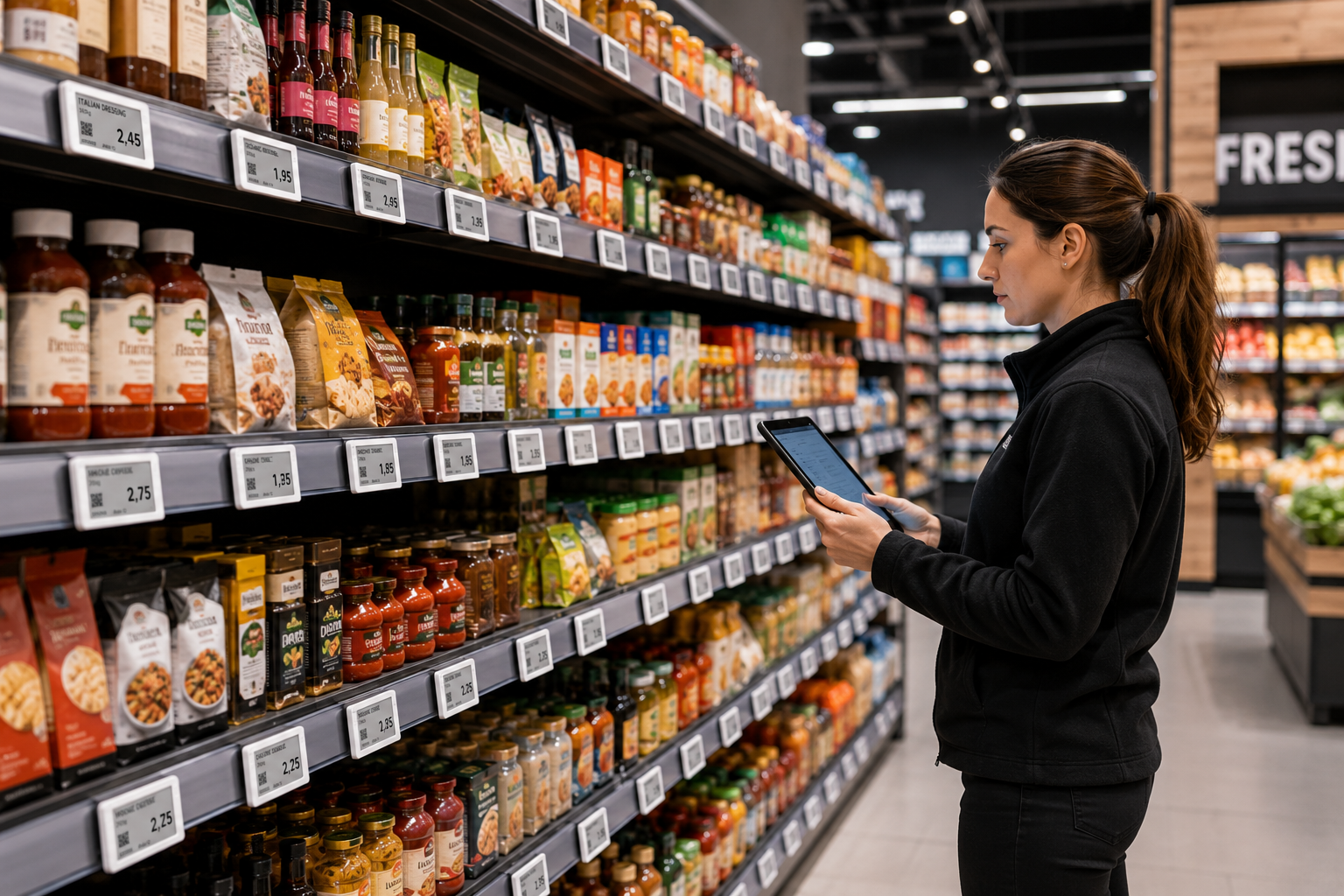
Quick answer: ESL systems benefit retailers by automating price updates, reducing labour costs, improving pricing accuracy, supporting promotions and keeping shelf prices synchronized with POS, ERP and inventory systems.
What are Electronic Shelf Labels?
Electronic Shelf Labels are digital price labels placed on retail shelves. Instead of printing and replacing paper labels manually, prices and product information are updated wirelessly from a central system.
ESL labels can display prices, promotions, barcodes, QR codes, product names and stock-related information. They are a key part of modern retail automation and digital store management.
Top benefits of ESL in retail
- Automatic price updates: update prices centrally across the store.
- Improved pricing accuracy: reduce mismatch between shelf price and checkout price.
- Lower labour costs: staff spend less time replacing labels manually.
- Faster promotions: launch, change and end campaigns quickly.
- Better customer experience: clear and consistent pricing builds trust.
- Retail automation: connect shelf prices with POS, ERP and inventory systems.
- Less paper waste: reduce printed labels and repeated manual replacement.
How ESL improves daily store operations
In a traditional store, every price change requires printing, sorting, replacing and checking paper shelf labels. ESL removes much of this manual work by allowing prices to be updated digitally.
This helps store teams focus more on customer service, shelf replenishment, stock control and sales instead of repetitive price label changes.
ESL and pricing accuracy
Pricing accuracy is one of the most important benefits of ESL in retail. When shelf prices are updated from the same central data source as the checkout system, the risk of price mismatch is reduced.
This is especially important for stores with many products, frequent promotions, dynamic pricing or multiple locations where price consistency matters.
Retail areas that benefit from ESL
| Retail area | Main benefit |
| Supermarkets | Fast price updates across many products |
| Pharmacies | Accurate pricing and clear product information |
| Electronics stores | Dynamic pricing and detailed product data |
| DIY stores | Efficient updates across large assortments |
| Convenience stores | Quick campaign and promotion changes |
ESL vs traditional price labels
Traditional paper labels have a low initial cost, but they require continuous manual work. ESL labels require a larger initial investment, but they can reduce labour, increase price accuracy and support faster store operations over time.
For retailers with frequent price changes, large product ranges or several stores, Electronic Shelf Labels often become a strategic tool for improving both efficiency and customer experience.
Return on investment
The return on investment for ESL depends on store size, number of products, frequency of price changes and labour costs. The more price changes a store handles, the more value ESL can create.
Savings can come from reduced manual label work, fewer pricing errors, faster campaign handling and more efficient store operations.
ESL and smart retail
ESL is often part of a wider smart retail strategy. When connected with POS, ERP and inventory systems, ESL can help retailers manage pricing, promotions and product information more efficiently.
Combined with barcode scanners, mobile computers, inventory software and label printing solutions, ESL can support a more connected and automated retail environment.
FAQ – Benefits of ESL in retail
What are the main benefits of ESL?
The main benefits are faster price updates, improved pricing accuracy, reduced manual work, better promotion handling and a more efficient retail operation.
Do ESL systems reduce labour costs?
Yes. ESL reduces the need to print, sort and replace paper shelf labels manually, which can save significant staff time in stores with many products.
Can ESL improve pricing accuracy?
Yes. ESL helps keep shelf prices synchronized with central pricing systems, POS and ERP data, reducing the risk of price mismatches.
Are ESL systems suitable for small retailers?
Yes, but the value depends on product range and price-change frequency. Small retailers with many frequent changes can also benefit from ESL systems.
Need help with Electronic Shelf Labels?
Contact Streckkods-Center for advice on ESL systems, digital price labels, barcode scanners, label printers and retail automation solutions.
Email: info@streckkodscenter.se
Phone: +46 (0)31-27 42 30