- Unbeatable prices all year round
- Flat-rate shipping on many products.
- +46 (0)31-27 42 30
- info@streckkodscenter.se

Battery Life in Electronic Shelf Labels
Battery life in Electronic Shelf Labels (ESL) is one of the most important factors when retailers evaluate digital price labels for stores, supermarkets and retail chains.
A well-planned ESL system can operate for many years with low maintenance, helping retailers automate price updates while keeping operating costs under control.
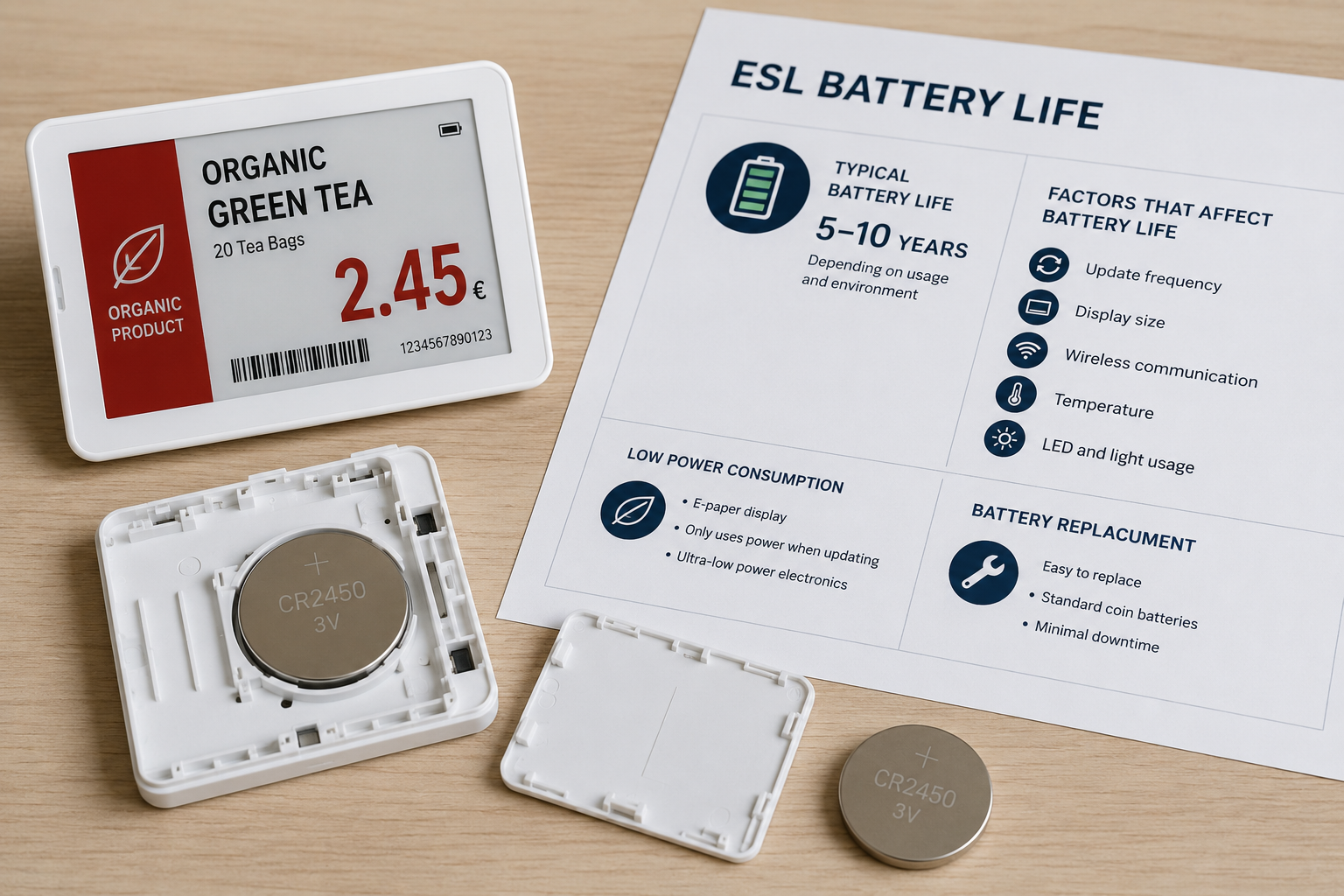
Quick answer: Most Electronic Shelf Labels are designed for long battery life, often several years depending on display size, update frequency, wireless communication, LED usage and store environment. Battery status can normally be monitored centrally in the ESL system.
Why ESL battery life matters
Electronic Shelf Labels are placed across store shelves, often in large numbers. A supermarket or retail chain may use thousands of digital price labels, so battery performance is important for reliability, maintenance planning and total cost of ownership.
Long battery life means fewer replacements, less manual work and more stable store operations. It also helps retailers use ESL systems efficiently without constantly worrying about label maintenance.
How ESL batteries work
Most Electronic Shelf Labels are battery powered and use low-power electronics. Many ESL displays use e-paper technology, which only consumes power when the display changes. Once the price or product information is shown, the label can keep the image visible without continuous power use.
The label normally stays in a low-power mode until it receives an update from the ESL system. This makes ESL suitable for long-term retail use where labels need to be reliable but do not require constant interaction.
Typical battery life in ESL systems
Typical ESL battery life depends on the label model, display size, battery capacity and how the system is used. Many ESL labels are designed to operate for several years before batteries need replacement.
Retailers should always evaluate battery life based on real store conditions, including how often prices are updated, how many promotions are used and whether additional features such as LED flashing or NFC are active.
Factors that affect ESL battery life
| Factor | Effect on battery life |
| Update frequency | Frequent price changes use more power than occasional updates. |
| Display size | Larger labels may require more power during refreshes. |
| LED usage | Flashing LEDs can reduce battery life if used often. |
| Wireless communication | More communication traffic can increase power consumption. |
| Temperature | Cold or demanding environments may affect battery performance. |
| System settings | Optimized update schedules help extend battery life. |
How to maximize ESL battery life
- Optimize update frequency: avoid unnecessary refreshes and schedule updates efficiently.
- Use the right label size: choose a display size that fits the shelf and information needs.
- Limit LED usage: use flashing indicators only when they add real operational value.
- Monitor battery status: use system reporting to plan maintenance before labels fail.
- Choose quality ESL hardware: reliable labels and batteries reduce long-term maintenance.
- Plan for store environment: consider temperature, humidity and department-specific conditions.
Battery replacement and maintenance
Battery replacement should be planned as part of the ESL maintenance process. In larger stores, it is