- Unbeatable prices all year round
- Flat-rate shipping on many products.
- +46 (0)31-27 42 30
- info@streckkodscenter.se

Barcode technology – past and present
Barcode technology is one of the most important technological foundations in modern retail, logistics and industry. By enabling fast, standardized and reliable product identification, barcodes have transformed the way goods are handled, tracked and sold across global supply chains.
From the earliest linear barcode formats to today’s advanced two-dimensional codes, barcode systems have evolved alongside increasing demands for automation, traceability and digital integration.
Did you know? The first commercial barcode scan took place in 1974 on a pack of chewing gum in the United States — marking the beginning of automated retail systems worldwide.
The early days of barcode automation
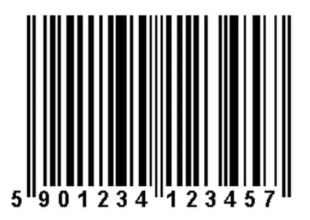
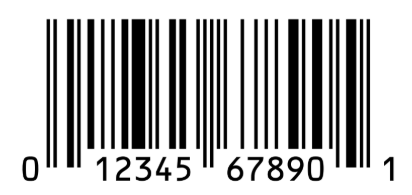
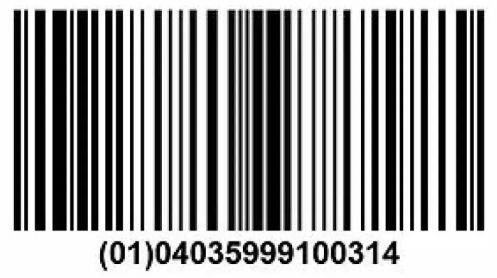
The first commercial barcodes were introduced during the 1970s and used simple linear structures consisting of vertical lines with varying widths and spacing. These codes were designed to be read by optical or laser-based barcode scanners.
The introduction of barcode technology enabled automated checkout systems, improved inventory management and significantly reduced manual handling errors. This became the foundation for today’s retail and warehouse systems.
Barcode technology across industries
Automotive and manufacturing
In the automotive industry, barcode systems are used to track components throughout the entire production process. Each item can be linked to supplier data, manufacturing dates and production batches, ensuring full traceability and quality control.
Transportation and logistics
Barcodes are essential within transportation and logistics operations. Packages, pallets and shipments are scanned throughout the supply chain, enabling real-time visibility and reducing the risk of delivery errors.
Warehousing and inventory management
Warehouse operations rely heavily on barcode systems for receiving, inventory control, picking and shipping. Integrated barcode workflows improve inventory accuracy while increasing operational efficiency.
Healthcare and pharmaceuticals
In healthcare environments, barcode technology is used to support medication management, patient identification and product traceability — areas where minimizing human error is critical.
RFID technology as a complement
Alongside barcode technology, RFID (Radio Frequency Identification) has emerged as an important complementary technology for environments requiring very high levels of automation and traceability.
RFID is commonly used in large-scale logistics, industrial manufacturing, asset tracking and access control systems where contactless identification provides operational advantages.
The future of barcode systems
Despite the growth of RFID technology, traditional barcode systems are expected to remain essential for many years due to their simplicity, low cost and global standardization.
The future lies in combining barcode systems with RFID and digital tracking technologies to create more intelligent and automated business processes.
Need help choosing barcode solutions?
Email: info@streckkodscenter.se
Phone: +46 (0)31-27 42 30